
Renovating on Route 66: A Sapulpa Downtown Guide
Sapulpa's Route 66 heritage is a point of pride - and its older buildings and homes come with their own renovation-debris quirks.
In this guide
- A town built by the road
- Why older buildings give up denser debris
- Tight lots and the placement problem
- The Tulsa-metro growth on the other side
- Two different sizing conversations
- Keeping a historic job clean
- Booking it right
Sapulpa wears its Route 66 heritage proudly - the historic downtown district, the Heart of Route 66 Auto Museum, the old Rock Creek Bridge. That heritage is lovely to live with and it shapes the renovation work here in ways worth understanding before you rent a container.
A town built by the road
Sapulpa grew up as an oil-boom railroad town and then as a Route 66 stop, and the downtown historic district and the older residential streets around it date from that era. The county seat of Creek County and "Oklahoma's Most Connected City," it has a dense core of older buildings and homes that see steady renovation.
Renovating one of those older properties is different from working on a new build out toward the Interstate 44 corridor, and the difference shows up in the debris and in the placement.
Why older buildings give up denser debris
Older homes and commercial buildings were built with heavier materials. Where a new build gives up drywall, engineered flooring and packaging - bulky, light stuff - an older Route 66-era property gives up dense plaster, heavier dimensional framing, layered flooring built up over decades, and sometimes masonry.
That density matters because it changes the sizing. Dense material reaches a container's weight allowance while the box still looks half full, so the honest recommendation on an older-home renovation is usually a smaller container filled properly rather than a big one that goes overweight.
Tight lots and the placement problem
The other feature of the historic areas is the lots. Downtown and the older residential streets have short driveways, narrow approaches, mature trees and aging concrete - all of which constrain where a container can go.
A 30 yard needs around seventy feet of straight approach and roughly twenty-three feet of overhead clearance when it tips. On a tree-shaded older street, mature limbs stop more deliveries than narrow driveways do. So on a historic-district job, the container size is often decided by the site as much as by the material - another reason the smaller box frequently wins downtown.
We plank to protect the aging concrete on these older lots, and we take extra care with placement. Send a photo of the spot from the street and we will tell you honestly what will fit.
The Tulsa-metro growth on the other side
Sapulpa is not only its historic core. As part of the growing Tulsa metro, the newer subdivisions are spreading toward the Interstate 44 corridor and out into Glenpool, Jenks and Bixby. That growth produces the opposite kind of debris - bulky, light new-construction and newer-home remodel waste that wants a larger container.
So the same town produces two very different renovation profiles: dense debris on tight historic lots downtown, and bulky debris with easy placement out in the new subdivisions. The container that is right for one is wrong for the other.
Two different sizing conversations
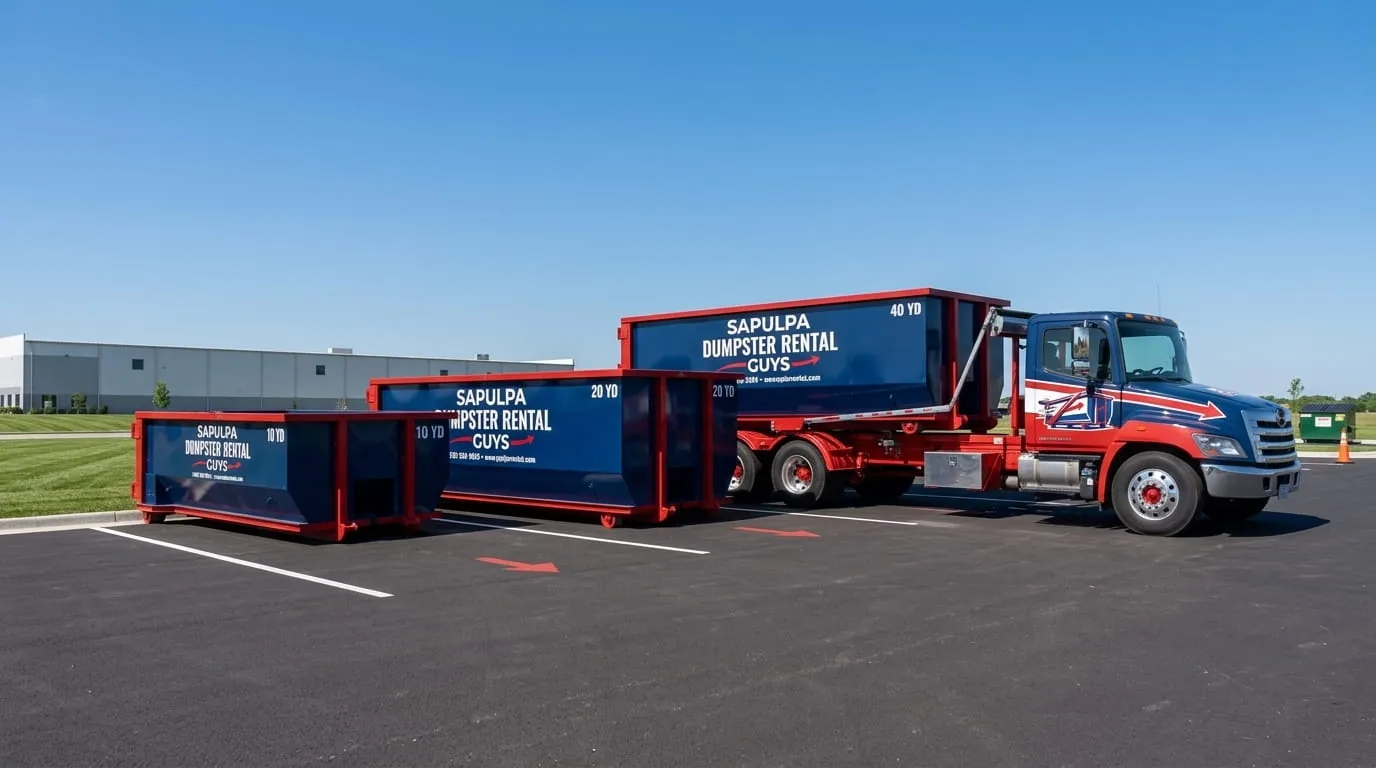
This is why we always ask roughly when the property was built. An older Route 66-era home renovation usually points to a 10 or 15 yard - dense material, tight lot, filled properly. A newer subdivision remodel of the same square footage points to a 20 - bulky material, room to place it.
Getting this right saves real money. Order a 20 for a historic-home gut and you pay overage on weight; order a 15 for a newer-home clear-and-refresh and you run out of room. Tell us the age of the house and the main material and we match the container to both.
Keeping a historic job clean
Older renovations often turn up masonry, old concrete and the occasional load of dense fill. Keep those heavy materials separate from the general debris - they belong in a dedicated 10 yard - and the main container stays lighter and routes more efficiently.
And the usual prohibited items apply: old paint, solvents and chemicals from a decades-old house are household hazardous waste and stay out of the box. The City of Sapulpa gives disposal directions for those at 918-224-3040.
Booking it right
Whether you are restoring a piece of Route 66 history downtown or refreshing a newer home out by the highway, the booking conversation is the same ninety seconds: what the project is, when the property was built, the main material, and a photo of the placement spot. We will size it to the debris and the site, give you one flat rate, and haul it to the Creek County Landfill for you.
Book a container in Sapulpa
One flat rate covering delivery, seven days, pickup and disposal.
(539) 265-7958Questions readers ask about this
Do older Sapulpa homes need a different size dumpster?
Usually a smaller one. Older Route 66-era homes give up dense plaster, heavier framing and layered flooring that reaches a container's weight limit before it fills, so a 10 or 15 yard filled properly is often cheaper than a 20 that goes overweight.
Can you place a dumpster on a tight downtown lot?
Often, but the size may be constrained by the site - short driveways, narrow approaches and mature trees downtown can rule out a larger container. Send a photo from the street and we'll tell you honestly what fits. We plank to protect older concrete.
What about a newer home out by the highway?
Newer subdivision homes toward the I-44 corridor and out in Glenpool and Jenks give up bulky, light debris that wants a larger container - usually a 20 or 30 - with easier placement on the bigger lots.
Where does the renovation debris go?
To the Creek County Landfill on South 33rd West Avenue. Keep masonry and heavy fill separate in a dedicated 10 yard, and keep household hazardous waste out - the City of Sapulpa gives disposal directions at 918-224-3040.